

FUNCTIONAL STRENGTH TRAINING BENEFITS
Having faced physical challenges, Wally shares heartfelt insights into each program, focusing on rebuilding strength, restoring confidence, and progressing safely at your own pace. His experience guides a coaching style that emphasizes patience, sensible progress, and respecting individual starting points.
All programs operate under the leadership of owner and head trainer Wally Baskovich, whose five decades of practical exercise experience and professional personal training career since 2011 set the standard for the studio and its coaching team.
Functional strength training builds the kind of strength that carries into everyday life, not just gym performance. The goal is simple: move better, feel steadier, and remain independent for as long as possible.
Improved Stability and Balance
Stronger Legs and Core for Daily Movement
Better Mobility With Less Stiffness
Safer Strength Without Risky Exercise
Improved Gait, Posture, and Coordination
Greater Confidence in Movement
Support for Long-Term Independence
Better Carryover From Rehab and Recovery: For individuals coming out of physical therapy or managing neurological conditions, functional strength bridges the gap between rehab exercises and real-world movement demands.
“Eat Breakfast Like A King, Lunch Like A Prince, Dinner Like A Pauper.”
I first heard this at a seminar called Success ‘95 in St. Petersburg, FL. Mary Lou Retton was there, along with Zig Ziglar, Norman Schwarzkopf, and many others. A health advocate shared this quote, and I never forgot it.
This traditional nutrition principle reflects how the body processes energy throughout the day.
Insulin sensitivity tends to be greater in the morning and early afternoon, so the body processes carbohydrates more effectively earlier in the day. Additionally, energy requirements are higher when awake, which means that larger morning meals are more likely to be used for activity rather than stored.
Front-loading calories — especially protein — improves appetite regulation, reduces late-night cravings, and supports more stable blood sugar levels. “Larger early meals are often associated with improved appetite regulation and better weight management outcomes.”
As the day winds down, “activity and energy demand typically decrease”. Large, calorie-dense dinners — particularly high in refined carbohydrates — are more likely to exceed immediate energy needs and contribute to fat storage when consistently consumed late.
Training Schedule Influences Meal Timing:
Early morning training: lighter protein and moderate carbohydrates before exercise, followed by a larger recovery meal.
Afternoon or evening training: shifting more calories toward the pre-training meal supports performance and recovery.
The foundation remains unchanged regardless of timing:
Total daily calorie intake
Adequate daily protein
Whole, minimally processed food sources
Consistent eating patterns
For most adults — especially those focused on fat control, muscle retention, and stable energy — prioritizing protein and overall intake earlier in the day is a practical and sustainable strategy.
Progression & WRITTEN TESTIMONY’S
Ralph getting more dexterity
- 4 years after major Hemorragic stroke -
Mrs. Mary B: 9 months earier could not step onto a 5” aerobic step - PTL! - Parkinsons -
Mrs. Pat being consistant. - CMT
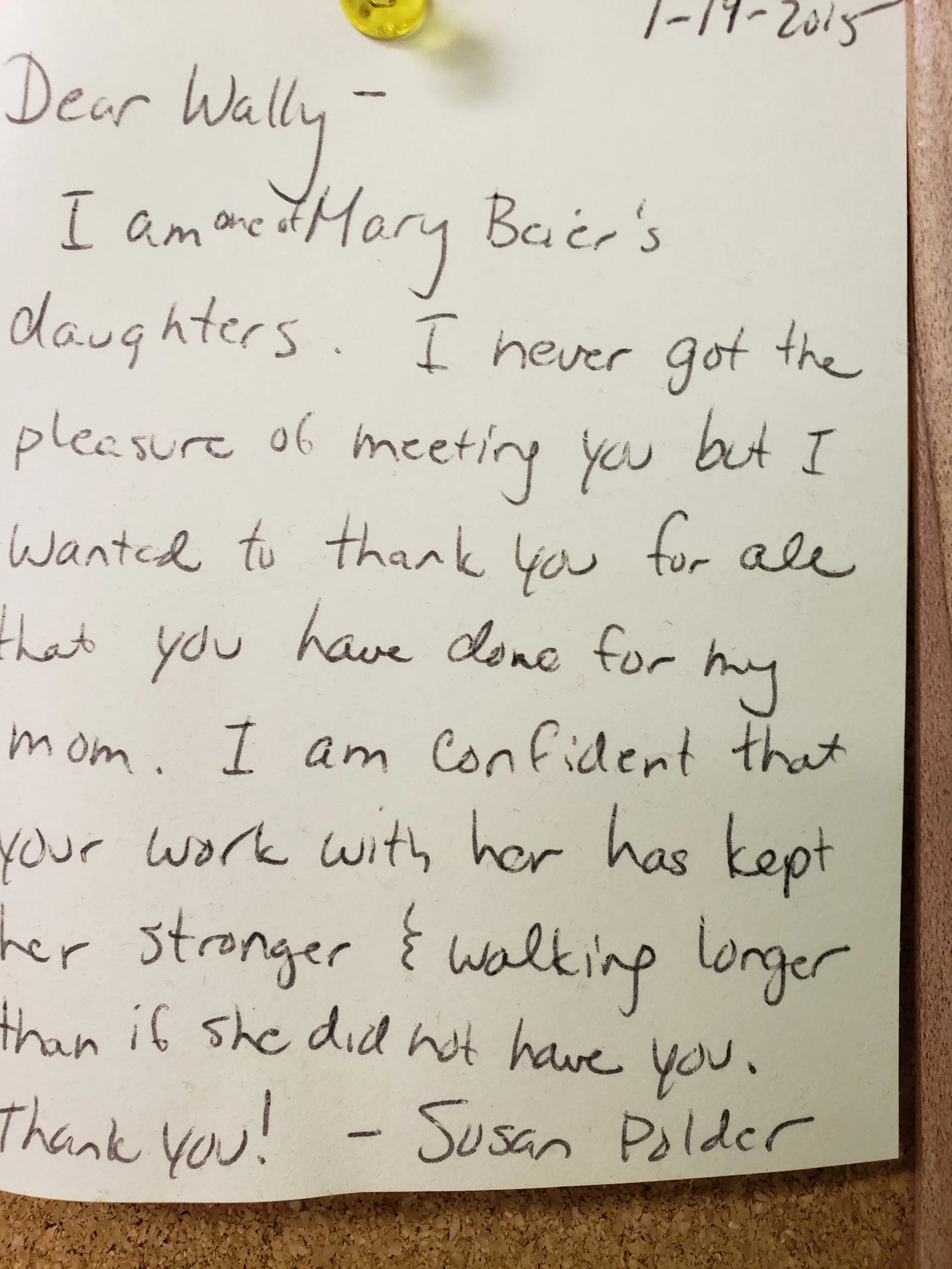
The daughter of Mrs. Mary.

From Brandon Wilde.

A very kind lady.
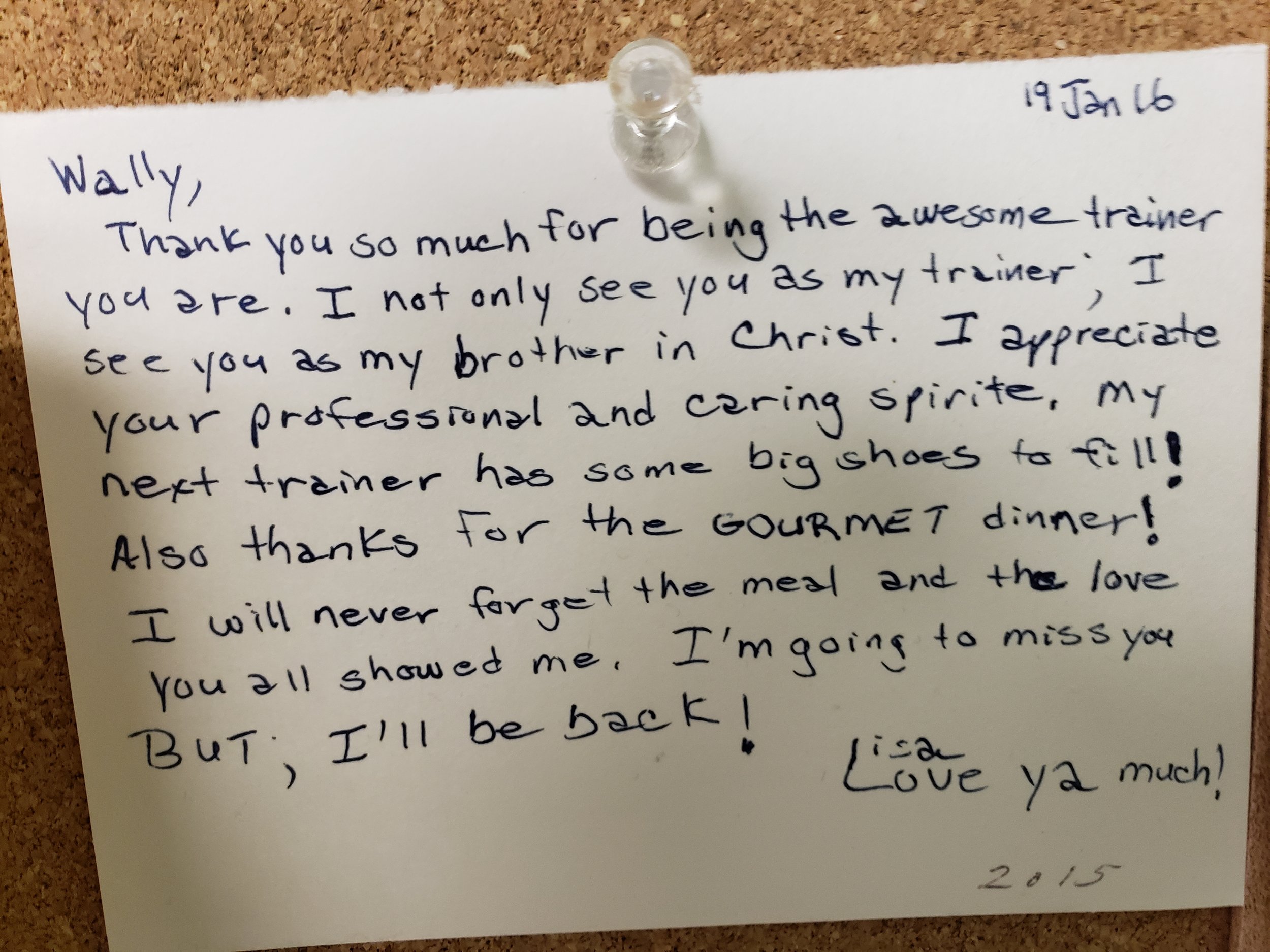
From member Lisa.

From Nancy H. a 5+ year member.

Letter of appreciation from a trainer we mentored for her career development.

A kind note for support of children's education projects in Israel, from Kathy R.
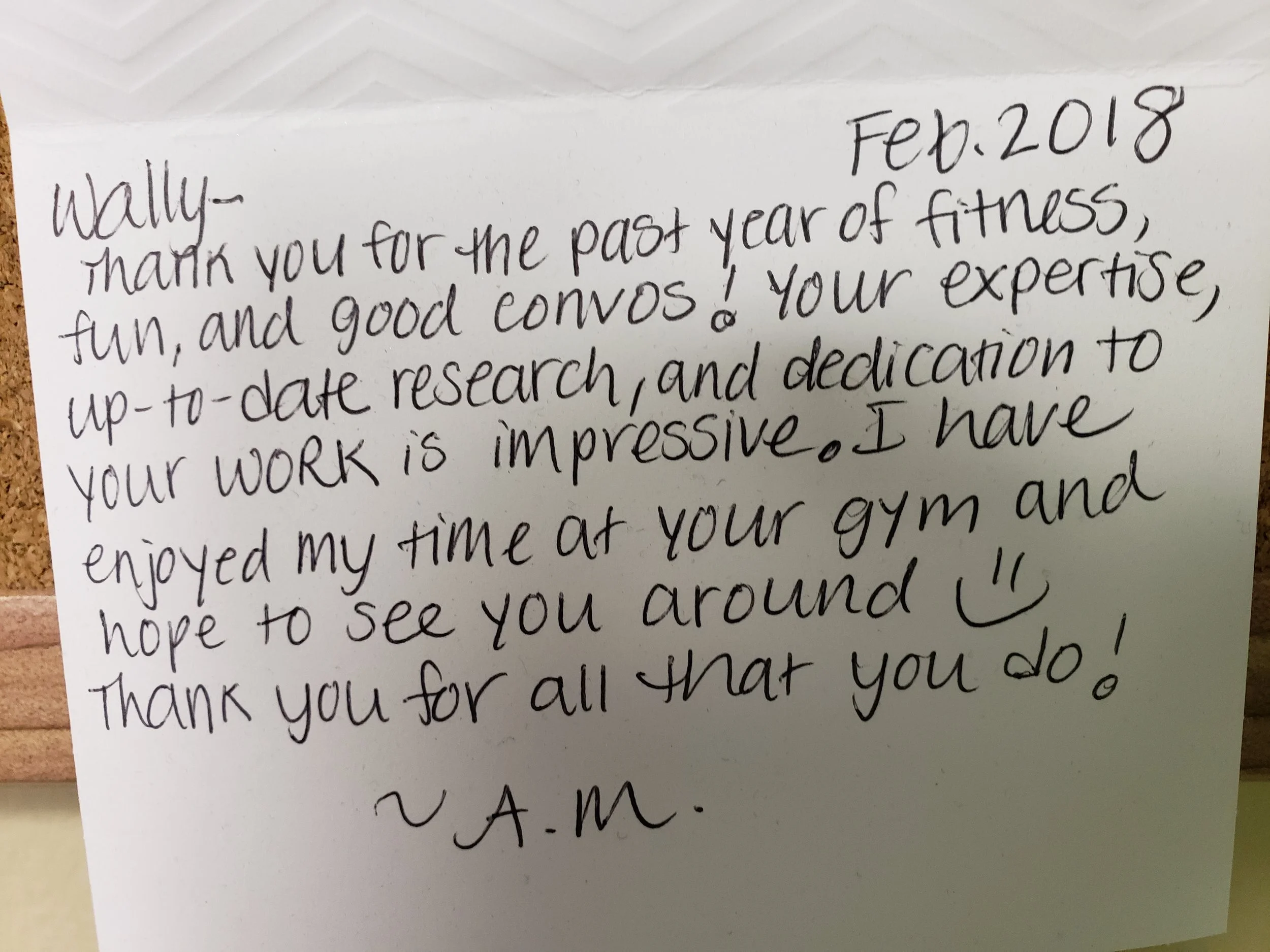
So sweet - love what we do.

Christmas and New Year greeting card. We trained most of their family.